How We Create Winning SEO Audits with Actionable Plans
The word audit gets some bad press in the industry because ‘audit’ can mean an export from a tool like Semrush, a list of recommendations that don’t move the needle, and then a £3,000 retainer to resolve them.
Eek.
That’s not what we’re doing here.
When talking about SEO, I stopped calling my audits ‘audits’. I call them an ‘audit and roadmap’ or ‘audit and strategy’ because they are so much more than the standard audit doc.
To be honest, many elements of what we do here fall out of SEOs remit and we creep into marketing generally or bringing SEO in line with other marketing tactics. But that’s what happens when you work in SEO.
What goes into an audit depends entirely on the site and the goals, but in this article, we’re going to dive deep into the many elements that we might include in an audit when we start to work with you.
Why are SEO audits important?
You need to do an audit before you can start optimizing a site because there’s no one-size-fits-all in SEO. There are a lot of variables, and we need to figure out how your site performs and how we can move the needle for you.
We want to know what’s working now, your most popular pages, where the conversions are happening, when your traffic and/or revenue dropped, why, and so much more.
We need the data before we can create an actionable plan that creates revenue from SEO.
I liken it to baking in someone else's kitchen. You don’t just go in assuming the kitchen has everything you need (tools and ingredients.) Instead, you find out exactly what they’ve got and close the gap between what’s there already and what you need.
It’s about being highly productive, bringing only what you need to deliver the greatest output.
Key elements of an SEO Audit
Every audit looks a bit different because no two sites are exactly the same. When conducting a website audit, we’ll focus on the most relevant areas to your site, industry and goals. But here are some ideas of what’s included.
The foundations
Audit sections vary depending on the site and business goals, but here are some fundamentals.
Plain English recommendations and insights
Every audit we do includes plain English insights so anyone can understand the why behind the recommendation.
Each page will have:
- Data
- Insights (plain English)
- What you’ll learn on this page
- How we use the data to support the strategy
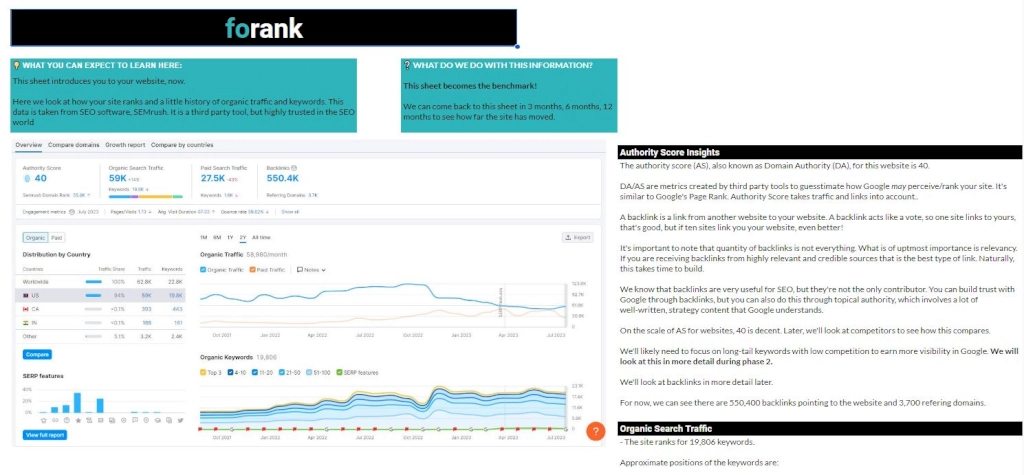
Naturally, some parts of the audit, like the technical sections, might not make sense to everyone, but you will know the why behind the technical requests and it’ll be tied to a goal like more revenue.
State of the website now
Before we can make recommendations on what your site needs to do, we need to understand how the site is now. What does it rank for? What could it rank for? How’s the backlink profile? What are the top pages? Are they relevant? Where do we want to send users?
When you take your car to the garage you expect the team there to drive the car, listen for a problem, look under the bonnet. This part of the audit is a bit like that.
Technical SEO
When it comes to status codes, broken links, crawl depth and website architecture there is some crossover with what falls under content and what falls under technical.
For the purpose of this article, technical SEO covers anything that requires implementation support from someone who can code. We have an in-house developer who helps put this section of the audit together so that your devs have instruction from a dev; they speak the same language.
Page speed
Page speed isn’t always our first port of call, but if you’re in a highly competitive market optimizing page speed might be necessary.
Stewart, a website developer, handles this part of the audit project. He can create an audit and actionable report that you can hand over to your dev team. They will know
- What to fix
- Where it’s an issue
- Why it’s an issue
- How to resolve it
Plus, we provide prioritization so your team know which task will likely increase speed for the smallest amount of effort.
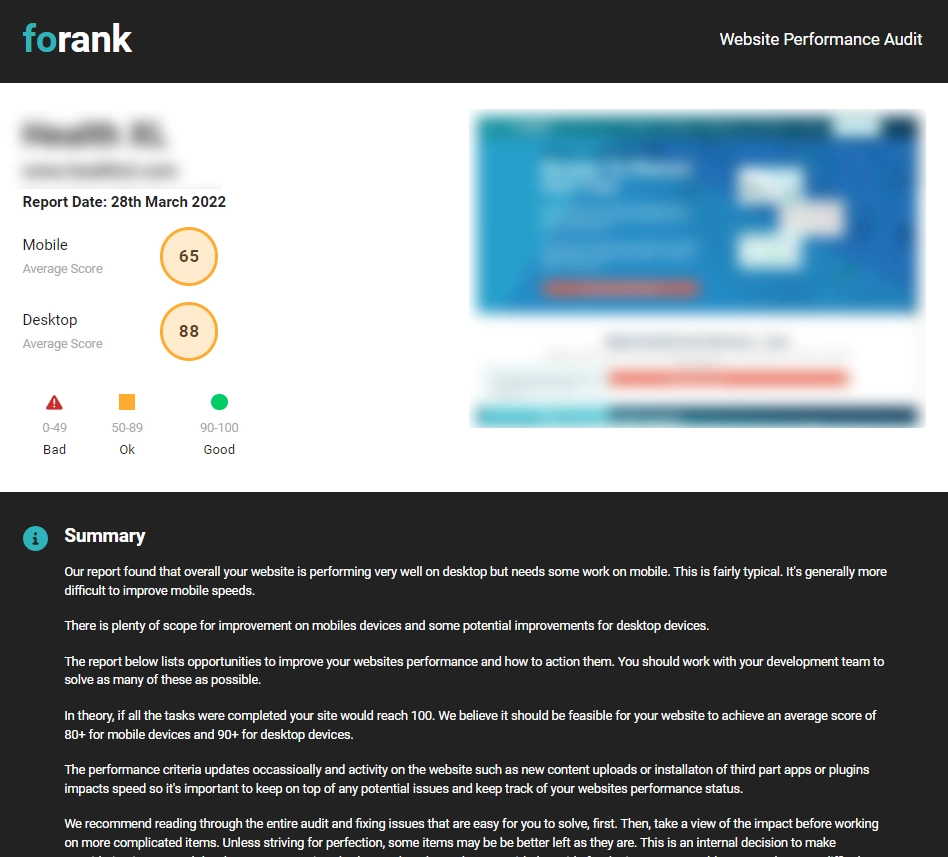
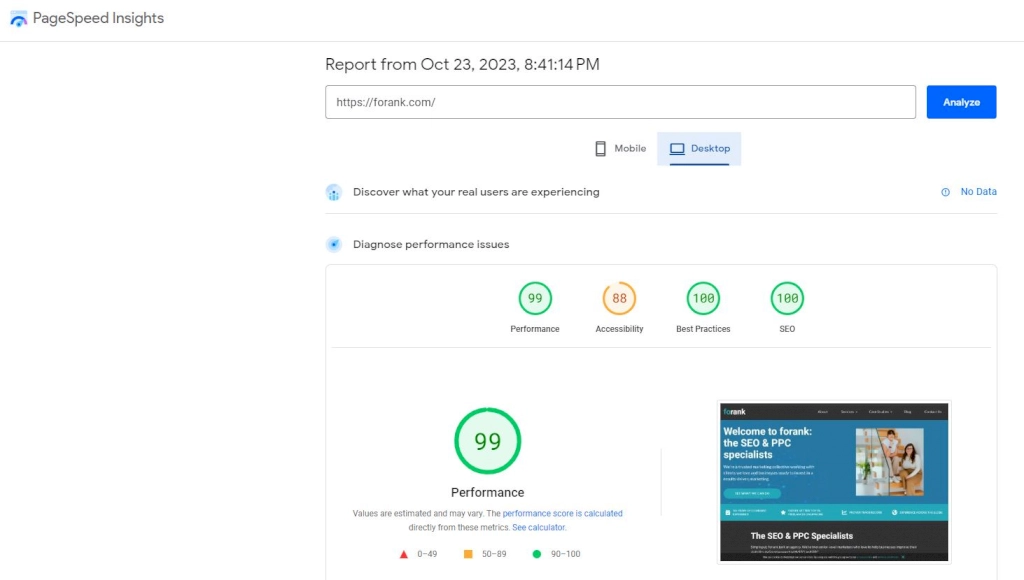
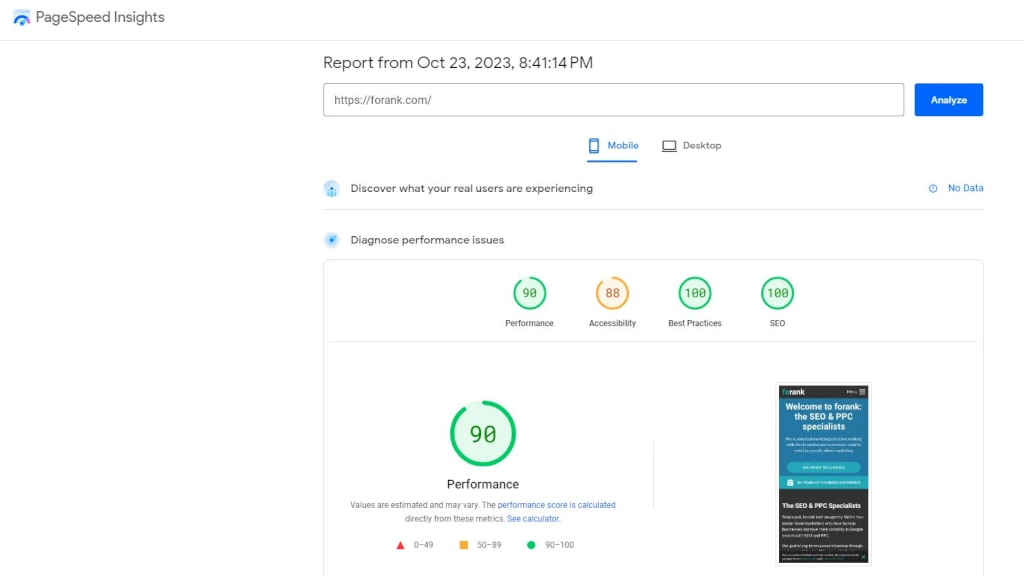
If your team were to do everything Stewart said, you’d achieve page scores well into the 90s.
On desktop
and on mobile
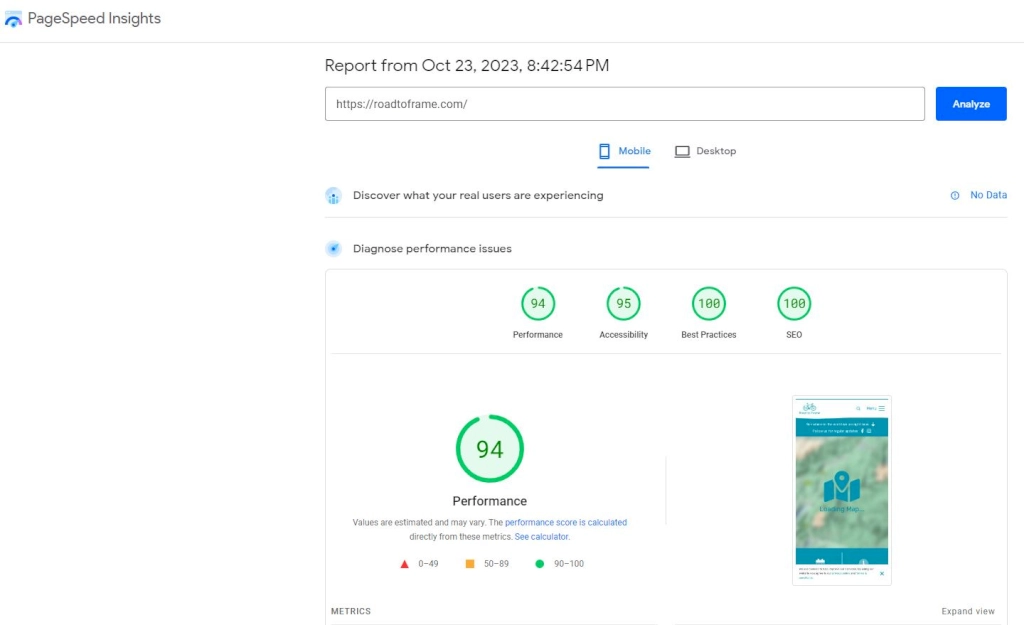
Forank.com isn’t the only website boasting a speedy site.
Common issues we see when auditing pages include
- Lack of lazy loading.
- Unoptimized Images: Large image files that haven't been resized or compressed.
- Not using next-gen image formats.
- Blocking javascript and CSS in above-the-fold content
- No browser caching
- Unminified code
- Render-blocking resources
- Missing async or defer attributes on scripts
- Unused CSS/JS: this one is hard to fix and generally not something we begin with. Sometimes we never resolve this. The effort is not worth the result.
Indexing and crawlability
Indexing and crawlability mean search engines can discover your content and index your website's pages; only then can you expect to rank on Google.
Effective indexing and crawlability are non-negotiable. We want sites with as few ‘poor URLs’ as possible, ideally zero.
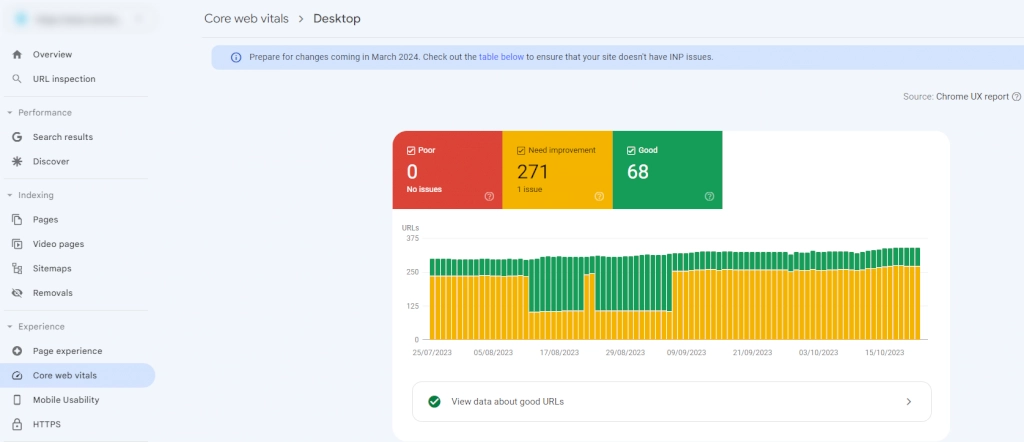
Common issues we see related to indexability and crawling
- Poor site architecture (we handle this as part of content)
- Incorrect XML Sitemaps
- Broken links across the site
- Robots.txt issues
- Canonicalization and/or duplicate content
- Orphaned pages
- Site/click depth of important pages
Schema
We love schema here. I think Schema is so powerful. As EEAT becomes increasingly important, schema feels like a non-negotiable.
We can audit your site to identify where your schema is sub-par. We’ll look at competitors to see where the benchmark is and then strategize to take your schema further.
Our web developer, Stewart can supply code and create schema templates.
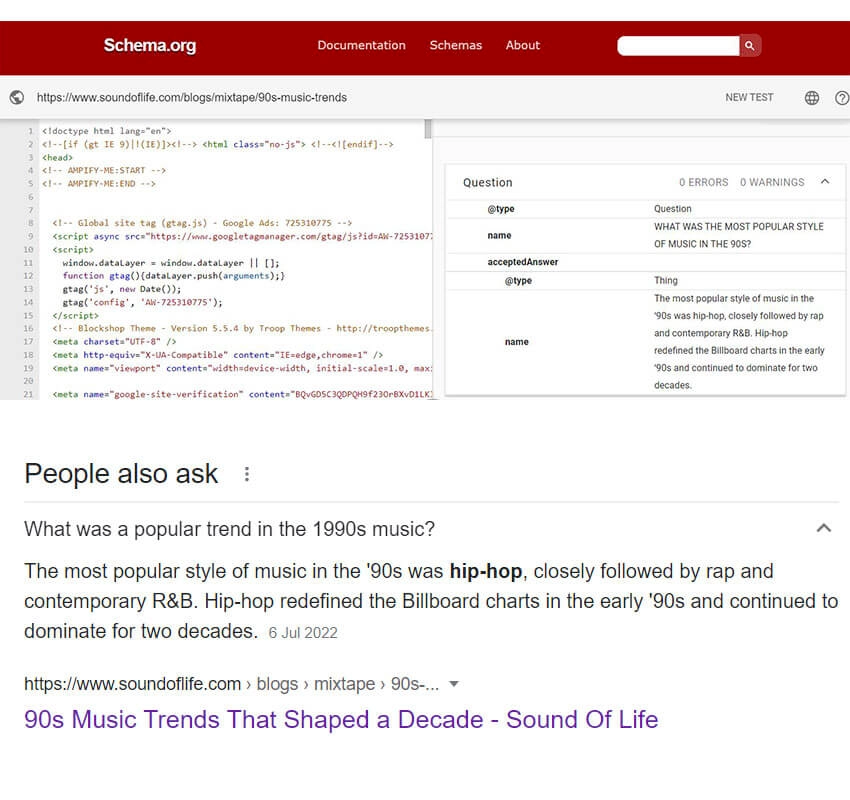
Schema implementation throws data to Google about your business. We’ve used it to secure knowledge panels, and featured snippets. We use it to add review stars, prices and extra details to SERPs. And, in the background we use it to share details about your business showing Google you’re real people behind a real business.
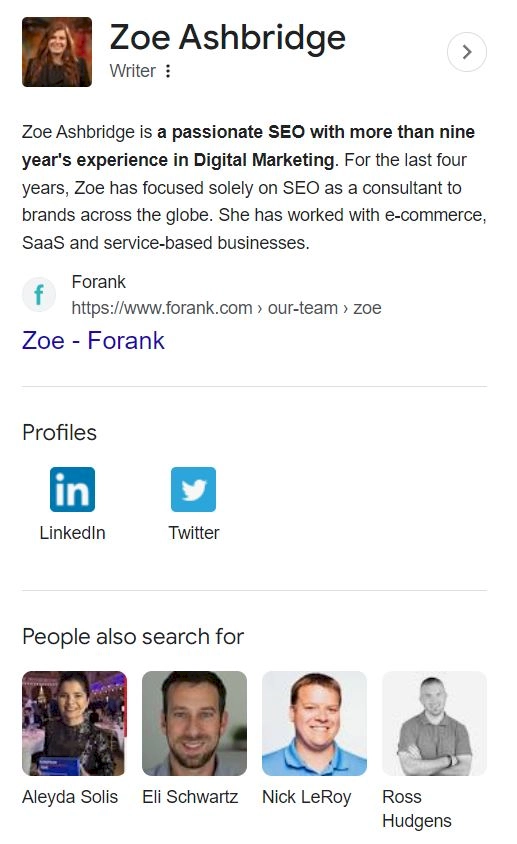
Knowledge panel example
My knowledge panel appeared after we started implementing person schema on our site.
People Also Ask example
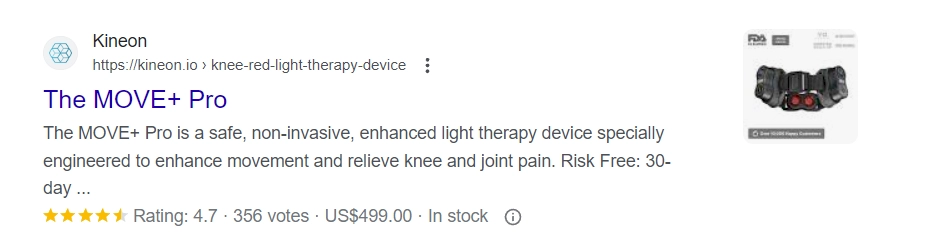
Product schema: price and reviews
We use it to add review stars, prices and extra details to SERPs.
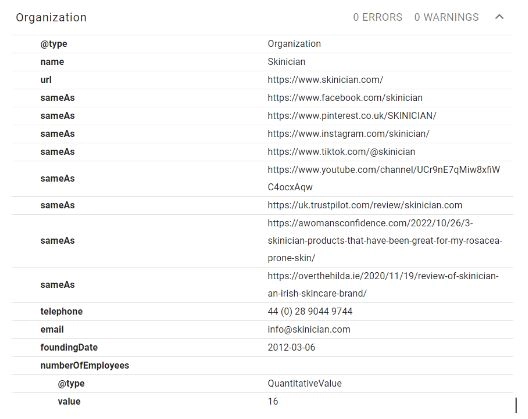
Build authority
In the background, we use schema to share details about your business showing Google you’re real people behind a real business.
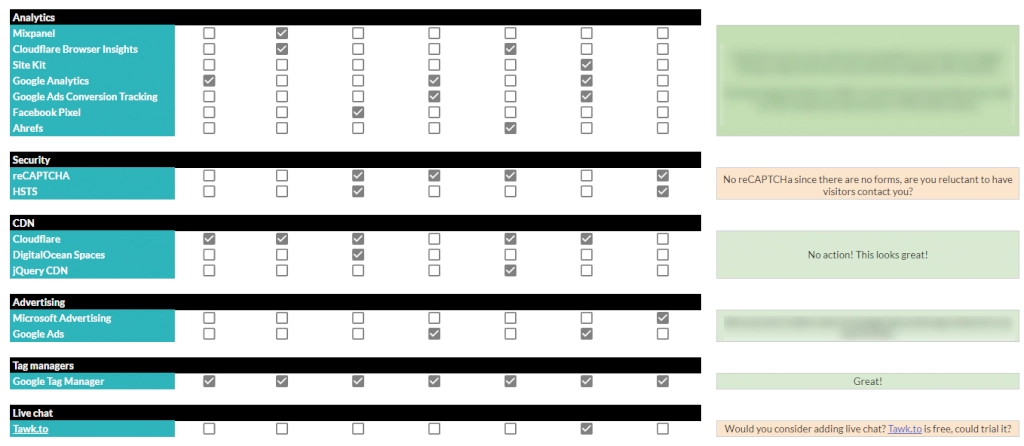
Tech stack spy
There’s nothing like our tech stack spy report if you want to see what your competitors are doing with their marketing.
You’ll be able to see what tools and software your competitors are using and what you could add to close the gap on them.
We built our own tool to conduct this analysis.
Content
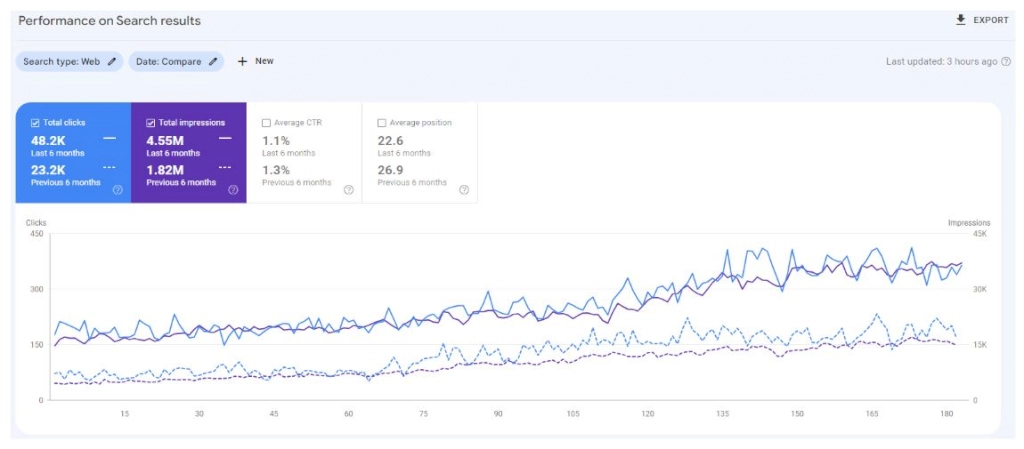
Content is a huge part of SEO. It takes a long time to build a truly strong content structure, but once you’ve got it, you’ll benefit in site visits, trust brand/consumer relations, and of course, revenue.
Eventually, your content could be earning
- $50,000/quarter generated from users who also viewed an article.
- 115% increase in revenue YOY
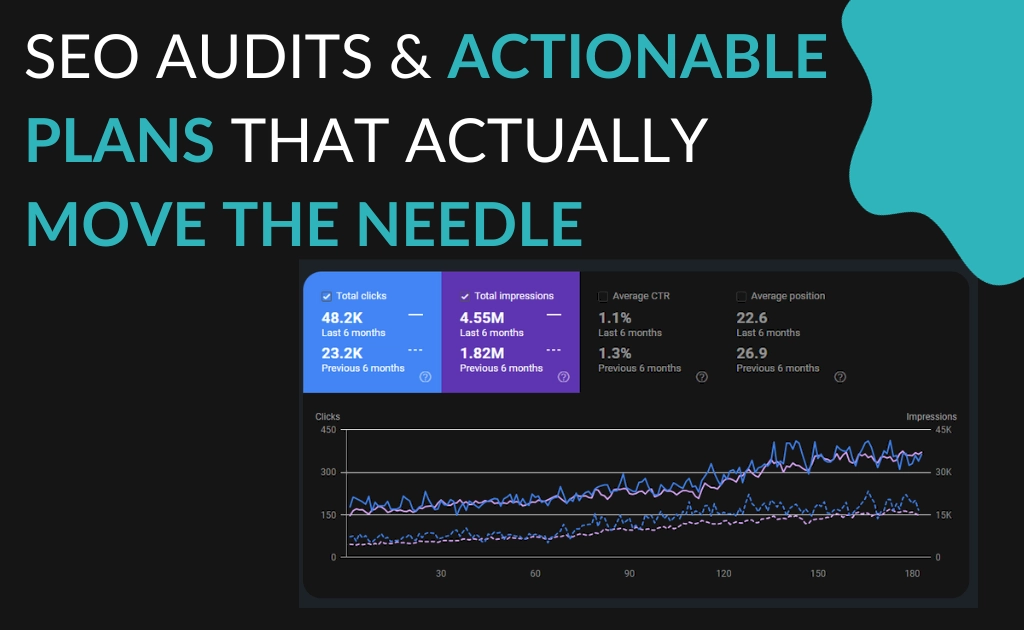
- 150.66% increase in organic traffic compared to the previous period
- And so much more.
Keyword drop analysis
A lot of businesses come to us because they’re experiencing a downward trend on some of their most desirable keywords. Maybe the site was hit by the Helpful Content Update or maybe it dropped for unknown reasons.
Don’t worry, it’s our job to find out.
Site architecture
Site architecture is so important and often the first port of call. Your site architecture impacts your user and your crawlability. We want the most important pages easy to find and perceived as important pages by Google so they’ll rank.
Your site architecture needs to be right before we venture into other services like backlinking.
Common issue we come across when auditing site architecture
- No clear hierarchy
- Too many blogs
- Not enough content
- Poorly optimised content
Keywords, keywords, keywords
To be honest, we’re more about topical coverage and clusters rather than keywords these days. Keywords are just a bit ‘in the weeds’ compared to topical coverage and showcasing E-E-A-T. But, keywords have their place. We like to look at what’s ranking now, especially money keywords on page two or three as these might be the easy wins.
Also, desirable keywords you want to rank for, keywords competitors rank for but you do not, and more.
Top pages
Your top pages should be highly relevant and pulling in the right kind of traffic. Providing your top pages are doing exactly that, they are also the pages we need to maintain and protect. It may be that your top pages are ToFu blogs that don’t convert. In this case, we can strategize to nurture and convert that traffic later. There’s always a job to do in SEO!
Competitor analysis and research
Competitor analysis is part of our audit process because we want to study the market and identify the gaps between you and competitors. Competitor analysis is about ‘proving’ to Google that you’re as knowledgeable (if not more knowledgeable) than your competitors so Google can see you deserve those top spots in SERPs. It’s also about closing the gap so you’re showing up where competitors are and not giving away clicks.
Marketing analysis
Where does your site in amongst competitors? Do you have as much traffic? Are you ranking aswell? What top pages are performing better for competitors? Where are your prospects spending their time on other sites?
Competitor Benchmarking
We want to find out what your competitor top pages are. We want to know where they’re showing up (and were you should be, too.)
Backlinks
Backlinks matter, there’s no doubt about it. In this initial audit we’re most interested in your backlink profile at a glance (does it look spammy or good?) We check the toxicity but we rarely sweat about it. We’ve used the disavow tool once in about four years.
When it comes to backlinking and this audit, we’re looking at it more generally and we get into the nitty gritty with content implementation where we might look at specific content pieces, how competitive the SERPs are and what you need to rank.
Tools we use to conduct a full SEO audit
We use a combination of free tools, SaaS and our own tools built by in-house developer, Stewart. I'd like to note that our audits are not entirely AI. We have human-led SEO auditing throughout.
Free tools
Some tools are available for free. You should be using all of these.
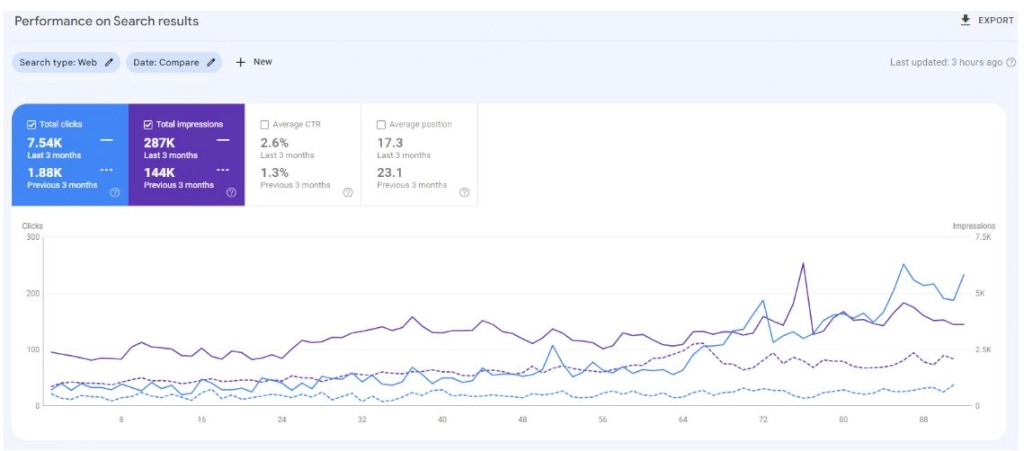
Google Search Console
We’re obsessed with Google Search Console (GSC). Consider GSC the source of truth. It tells us what your site is aactually being found for.
We use it to identify
- What’s working organically (and what’s not)
- Which content clusters to start with
- Where you have authority
- Indexing audit
- Crawl errors
- Traffic
- And more.
Google Analytics 4 (G4):
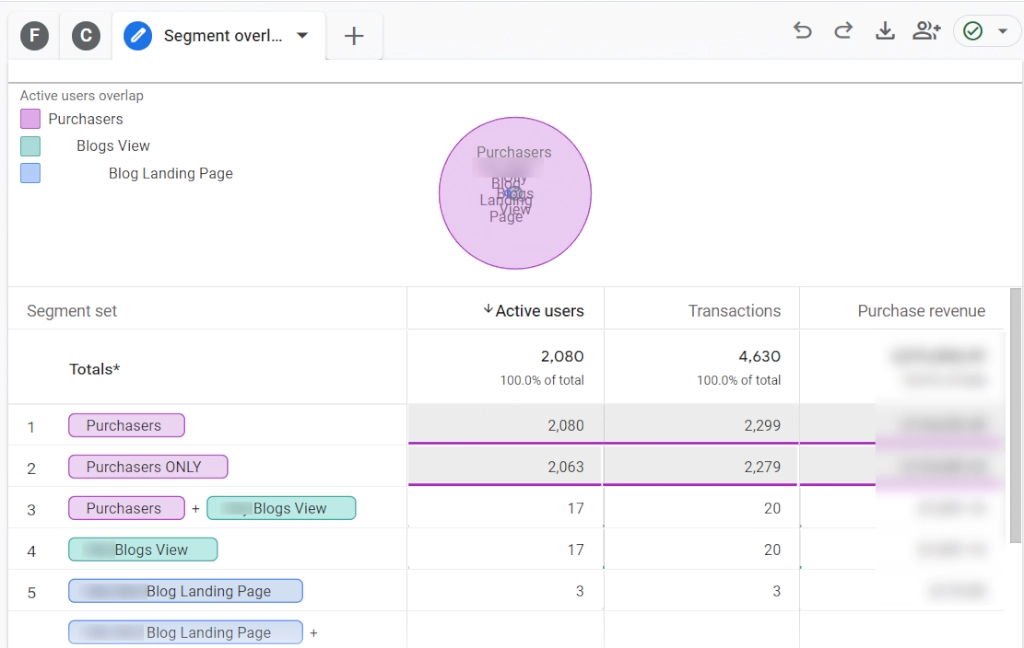
Obviously, we’re using G4 to understand your site. We’re interested in where your traffic is coming from, which pages they visit, how engaged they are, and the relationship between your content and your conversions.
Outside the standard, we might set up custom reports to get close to the data.
Google Page Insights and Lighthouse
When we’re working on page speed and technical SEO we use Google Page Insights and Lighthouse. We use the APIs in conjunction with our own tool which helps us create beautiful and helpful reports like the one screenshot above.
These are the main free tools but of course, there are so many others. I update my favourite tools on LinkedIn every now and again.
Our own tools
With a developer in-house sometimes it’s just easier for us to use our own tools.
Stew has developed
- Page speed audit tools to help consolidate reports across your site so you don’t have to work piecemeal.
- Schema generatorsbecause there are some templates we use over and over again, like that review and price schema, for example.
- Tools to tidy up code to keep everything neat and tidy.
Paid for tools
And of course we pay for tools, too!
Semrush
Over the years, we’ve flirted with Semrush and Ahrefs. For now, I’m loving Semrush because I think it crushes Ahrefs when it comes to competitive analysis.
Screaming Frog SEO Spider
We’re such a fan of Screaming Frog. We absolutely adore it.
We use it for
- Content audits and analysis including consolidation of data from the free tools above
- Schema audits and recommendations
- Finding issues
- Internal linking
- And so much more!
The SEO audit process
An audit takes around four weeks to complete. Within four weeks you’d have up to three meetings, one to kick-off, one halfway through and one to handover.
The second meeting is by far my favourite. By this stage, we’ve unearthed so many insights and our insights lead your team to have a tonne of ideas themselves. I find it’s a really exciting point of the project where we’ve got a pretty solid idea of where we’re going and we’re starting to relax because we just know we’re going to make a difference to your site.
Kick-off meeting
Here we want to talk to your team. If you’ve got an SEO in-house, we definitely want to speak to them. Other sales and marketing personnel are welcome to join.
We use this meeting to hear from you, what do you want to achieve and why? We like to hear about what SEO have done so far so we don’t end up telling you a bunch of stuff you already know. When hiring a specialist you want us to be moving you forward not repeating what you know. That said, in SEO, it can be nice for internal teams to have their ideas reflected back at them. SEO is very subjective.
We conduct phase one of the audit
We ask for two weeks to give our team time to complete the audit. Sometimes I call this the ‘cookie cutter SEO.’ This is our opportunity to pull all the data together and deeply understand your website.
During this phase we’re understanding your site and unearthing a tonne of routes we could take to level up the site.
Halfway meeting
Halfway we want to share what we’ve found so far. The reason why I think this meeting is important is because we want to make sure we don’t finalize ideas that you’re not ready to implement yet, or simply, don’t like!
In this halfway meeting our data analysis and ideas often fuels more ideas and nuggets client-side.
We use all of this data to finalize our ideas and construct a plan of attack.
Audit phase 2: Organizing findings and recommendations
After the halfway meeting we will have refined our ideas and identified the best tasks for us to dig deeper into.
We want to present issues discovered, their impact on SEO performance, prioritization and a final report with detailed recommendations for improvement.
Audit phase 2: Creating an Action Plan
We will prepare a full report for you with a detailed action plan. You will know what needs doing, what order to do it in and who should do it.
Naturally, we love helping with implementation so we can assign tasks to your team or ours.
Once the audit it’s done, it’s down to you (or us) to implement. And what we’re after is increased traffic, increased conversions and increased revenue.

An audit shines a light on what to do next
An audit tells you what you need to do, why, and in what order. One audit can shape at least three months of work if not six; I like to leave space for reactivity.
If you’re working with us then an audit isn’t just an audit. It’s a full strategy and roadmap and everyone who’s had one has been impressed.
There’s so much more we could do, it’s almost impossible to capture it in one blog, but hopefully, this gives you a good idea of what we can include in a monster audit that provides you will an actionable roadmap to SEO success.
What our clients say about our SEO audits.
Zoe was an absolute pleasure to deal with for our SEO Audit project. Our company had never really focused on SEO before, and there was limited knowledge about it internally.
When we met Zoe, we knew she was the perfect fit for our project and we were right! Not only did she meet our deadlines, she delivered work that was thorough, above and beyond, and easily understood by a layman.
The final deliverable is mammoth, but set out in such a way that it's easy for us to implement in bite-size chunks. Zoe is definitely top of our list for any future SEO-related work/projects.
Show More
Show Less
See original review on LinkedInI followed Zoe for some time on LinkedIn, thinking about the advice and knowledge she shared around SEO. I reached out and I’m very pleased that we clicked straight a way.
Zoe audited our website, came up with a cohesive and well thought out plan (lots of spreadsheets and detail) and we all got to work. Zoe has went above and beyond - trained and shared knowledge along the way, as well as encouraging us to think about new ways of working.
Our whole team thoroughly enjoy working with Zoe and her connections to deliver and achieve results. One of the best freelancers we have worked with. Trustworthy, honest and realistic, with her clients results at the center of her actions.
We’re excited for the future of SEO driving revenue with Zoe.
Show More
Show Less
See original review on LinkedInBeing quite new to SEO and Upwork, we couldn't have found a better partner to work with. From the initial proposal and full SEO audit, Zoe went above and beyond to deliver thoughtful, well-researched, actionable work.
I was worried about finding an SEO freelancer due to the niche nature of our brand, but Zoe was able to get a great grasp of our publication and exactly what we're trying to achieve. Her content mindset is excellent.
We're really looking forward to continuing our partnership with her! She's lovely to chat to as well – communicative and always helpful with a positive attitude.
Show More
Show Less
See original review on Upwork